Saturday, October 27, 2012

Chapter 18. Sales Promotion and Personal Selling


Louis Vuitton hasn't had a sale in 156 years. "Louis Vuitton is a unique organisation: the products never go on sale, nor are they sold at duty-free shops. We create what people desire. And I love that commitment to quality." Marc Jacob - artistic director, said.
A luxury brand often wants to impose a minimum resale price for its high-end clothes in order to prevent online resellers and competing boutiques from “underselling” or discounting the goods, making it available to a wider segment of the market, and in turn, eroding the luxury brand image. Louis Vuitton does not only manufacture and sell its products to a well defined target market, but also sells a lifestyle. Therefore, the pricing and promotion strategy it is not only to protect  the brand from counterfeiting but also to be loyal to its customers. Louis Vuitton doesn't have outlets, nor sample sales.


The brand emphasizes the personal selling, values the “fullness of information” exchanged between a customer and a Louis Vuitton salesperson; LV trains salespeople to tell the stories behind the products and inform customers regarding the rich details of latest pieces, how to care for the bags, and updates on key fashion designers. Yearly, Louis Vuitton supplements stores with catalogs that consumers can buy. The catalogues contain an immense amount of information about the products; the catalogues always sell out. 


Sunday, October 21, 2012

Chapter 17. Advertising and Public Relations


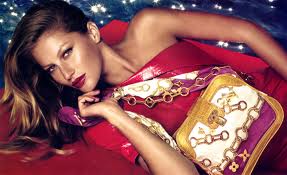
 Louis Vuitton commonly uses print ads in magazines and billboards in cosmopolitan cities. It previously relied on selected press for its advertising campaigns (frequently involving prestigious stars like Steffi Graf, Andre Agassi, Gisele Bündchen and Catherine Deneuve) shot by Annie Leibovitz. However, Antoine Arnault, director of the communication department, has recently decided to enter the world of television and cinema: The commercial (90 seconds) is exploring the theme "Where will life take you?" and is translated into 13 different languages. This is the first Vuitton commercial ad ever and was directed by renowned French ad director Bruno Aveillan.


 LVMH devotes over ten percent of annual sales to promotion and advertising. The company advertises its brands primarily in fashion and lifestyle publications. Some of the leading brands sponsor major international events with luxury cachet, as Louis Vuitton does by sponsoring the America’s Cup. Since image is an essential part of marketing luxury goods, LVMH is careful to evaluate every advertising and promotional opportunity for consistency with the image of its brands. As a result, the company manages a portfolio of luxury brands unparalleled in both size and sales.
Louis Vuitton’s chief executive Yves Carcelles once said: “Our brand is about reliability, quality, style, innovation and authenticity.” But that may not complete, according to Richard Wachman of London’s The Observer: “Louis Vuitton is also selling a certain idea of France… a brand that represents a mythical France, one of which neither the French nor the outside world can get enough.” In short, the essence of a luxury good is its exclusivity, i.e. not everyone can afford it, only a small group of people can enjoy it, and Louis Vuitton pushes exclusivity to the extreme.


The $8 million, specially built locomotive Marc Jacobs sent barreling down the Fall 2012 Louis Vuitton runway it's back, and this time, it serves as the backdrop of the house's Fall 2012 ad campaign. "We wanted to continue the journey we started with the fashion show — the glamour of travel and the romance of going somewhere," Jacobs explainedTo do so, the train was deconstructed and shipped to a New York studio where it was rebuilt, filled with models, and photographed by Steven Meisel. "We wanted to maintain the comfortingly luxurious and old-fashioned journey that the collection represented. Opulence, the brocades, the beautiful cuts of the suits, and I guess, the distant romantic glamour of travel," Jacobs said.

Louis Vuitton populated its Fall 2011 runway with supermodels like Kate Moss, Amber Valletta, Carolyn Murphy, and Naomi Campbell, but you wouldn't guess it based on the collection's campaign. Instead of its usual top model or actress seasonal face, the brand went with very young, in some cases: 16-year-old Zuzanna Bijoch, 15-year-old Daphne Groeneveld, 20-year-old Gertrud Hegelund, 16-year-old Nyasha Matonhodze, 20-year-old Anais Pouliot, and Fei Fei Sun, who was born in 1989.

In 2007, Louis Vuitton asked Ogilvy PR's Digital Influence team in Paris to generate positive word of mouth about the brand among online “influencers.” The campaign needed to be focused and efficient, because it would not be supported by global marketing nor a traditional public relations launch.
Ogilvy PR decided to use the launch of the new French Louis Vuitton web site (featuring André Agassi and Stefi Graff) to start a conversation among relevant online influencers. Ogilvy PR had three major goals in doing so: to drive users to Louis Vuitton's site via organic search; to lead them to associate the brand with high quality and emotional values; and to gather verbal testimonials and "buzz" for the website, which would in turn generate further interest in Louis Vuitton among key audiences — including the media and affluent consumers.

Saturday, October 13, 2012

Chapter 15. Retailing


Louis Vuitton store
1 East 57th Street (corner with Fifth Avenue)
New York, NY 10022
USA

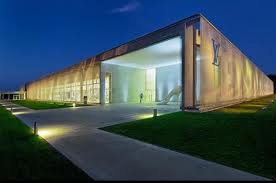
I recently visited the Louis Vuitton store on 5th Av, the largest in U.S. The building itself it's breathtaking, the exterior was renovated in 2007 by the architect Jun Aoki, he had the freedom to transform the stolid art decor exterior into a destination with multifaceted 21st Century appeal. Aoki conceived of the glass façade as a playfully sleek meditation on crystalline transparency and clouded translucency. Passersby experience a teasing optical illusion by day and a diffused streetlamp-through-fog appearance by night. At 20,000 square feet, the store's interior, designed by Peter Marino (New York) with LV Paris, was one of the largest retail spaces the LVMH store planning department ever worked on. More steel had to be added to the existing structure to support the new façade. Then, there was the Warner Bro's movie theater that had to be converted back to a level floor and structurally re-corrected for use as office space. Plus there were tons of wacky cartoon character detritus and candy machines left behind, such as the Superman who had formerly "supported" the old glass elevator and gargantuan Ninja Turtles.

The Damier checker pattern on the exterior is also the dominant interior motif: Grids and double-square rectangles are wittily integrated throughout the floors, in the checkerboard rugs, the double-square mill work for the product displays and the (quite literally) flashy LED "Feature Wall." The wall climbs from the ground floor up three stories to the top of the retail volume and is visible from outside the store. It can shift into 60 different spectrum colors, ranging from jewel-tone intense to misty pastel. It also functions as a screen for still images and films. Other interior highlights include: a wall of vintage trunks hovering above the periphery of the ground floor dotted with red hat cases evoking the 1943 Piet Mondrian painting, "Broadway Boogie Woogie," and the cantilevered bronze-clad monotube staircase.

The luxury store offers a truly unique shopping experience with its leather goods, classic men's and women's ready-to-wear, modern timepieces and jewelry, and uptown-chic footwear. Past the towering wooden grids that showcase the famed handbags lie the relaxed suits and ultra-feminine knee-length skirts that typify Vuitton's polished look, punctuated by bright colors and soft accents for a swank mix of tradition and modernity; this familiar style is echoed throughout Vuitton's designs, from the monogrammed canvas belts to the red ostrich-leather wrist watches. The displays are elegantly furnished, every item seems to scream buy me. The customers service is also excellent, the sales associates wear black suits with the tag of their name and they're not pushy, but well informed about the products and very professional. The atmosphere is without any doubt welcoming and is really hard to get out without buying anything.

Louis Vuitton uses e-tailing as well, its website is very elegant, informative and easy to navigate, the background music makes the shopping online even more pleasant. The website offers all services that you can find in the store, there are different ways you can contact a professional if you need any help, such as chat option, phone or call back option. The website offers personalized service as well.

Louis Vuitton's use of personalized e-commerce shows marketers how luxury brands can preserve their exclusive shopping experience and inspirational brand image online. Louis Vuitton is able to offer its traditional personalized service to its community of Facebook users via its Mon Monogram app. Users discuss purchase to a much greater extent than for other post topics, suggesting the app can act as a call to action while maintaining Louis Vuitton’s luxurious brand image. Alongside its posts about culture and travel, Louis Vuitton's Facebook page features the Mon Monogram app.  which allows members to fully customize their bag with hand-painted personal initials and stripes on the color and direction of their choice. They are then prompted to visit the Louis Vuitton store to purchase their customized bag. Users of the app can also send “virtual” gifts to each other, adding a social dimension to the experience.

Sources: vmsd.com/content/louis-vuitton, Louis Vuitton.com, LVMH.com 

Sunday, October 7, 2012

Chapter 6. Consumer Decision Making


What drives the consumer to purchase a Louis Vuitton product? As the president of the parent group LVMH said  “a truly unique concept that allies shopping, luxury, leisure, art, and culture”. Louis Vuitton is the most recognized luxury brand in the world, with 20 millions sales more than its competitors Louis Vuitton stands as the top of the evoked set in consumer mind.
When purchasing a Louis Vuitton product, consumers are driven by social factors, cultural factors, psychological factors and individual factors. The external stimulus of the consumers comes from a wide range of factors such as the continuous innovation of the products. Louis Vuitton has added ready to wear line, fine jewelry, watches and shoes to its collections. Along with the innovation of the products the company has adopted the new technology. The Mon Monogram application allows the consumers to customize their products. Louis Vuitton advertises its products through multiple channels, from print advertising to commercials, billboards, magazines and social media. The nonmarketing-controlled information source comes from hundreds of blogs, and review websites where people talk about the brand, lifestyle-related posts help associate Louis Vuitton with elite culture are successful in driving purchase discussion. When considering of purchasing a LV's bag the consumer is affected by conscious motives such as the high quality of the product that performs well, friends, colleagues or acquitances that already have a LV's bag, and limited edition make it more fashionable. The Latent motives are:
The bag will demonstrate that the consumer is successful, fashionable and elegant.The shopping experience, the feeling of being important and the long-lasting products make the consumer come back to the brand.
Louis Vuitton continues to collaborate with many artists, celebrities and sports figures the long list includes Bono Vox, Scarlett Johanson, Micheal Phelms, Madonna, Yayoi Kusama.


Saturday, September 29, 2012

Chapter 5. Developing a Global Vision


Louis Vuitton started to expand since 1885. In that year the company opened the first store in London followed by other two stores in the next two years. In 1904 Louis Vuitton participated in World's Trade fair in U.S. trying to get the brand recognized by the Americans. In 1987 The brand established its presence in Japan, getting a share in Asian market, and also prepared the strategy to expand in China, and other Asian countries. With a well established presence in Europe and U.S. and Japan, and more than 1500 stores around the world and its e-commerce site, Louis Vuitton is a multinational corporation.
Louis Vuitton has factories in France, Italy, Spain, Switzerland and U.S. Its leather products are mainly made in France and Italy. The watches are made in Switzerland. The outsourcing of Louis Vuitton differs from the competitors because the company outsources  to enhance the product quality and prestige.


Louis Vuitton is one of the first luxury companies to see the potential economic growth of emerging markets such as China and India. With the rapid economic growth of the Chinese market Louis Vuitton saw the need of the people to show their social status. In fact today Louis Vuitton is number one luxury brand preferred by the Chinese.


Louis Vuitton uses the same quality of its products everywhere in the world. A bag sold in China or in India is the same quality of one sold in France. The company takes in consideration the cultural background and how people would understand better the concept of luxury. In Japan the company promotes its products through innovation and the involvement in the art and architecture scene associating its products with the art.
Louis Vuitton's products have the same price all over the world. The company adopted the dumping practice for the Japanese market as a strategy to have a greatest market share. In fact, about 90% of Japanese own a Louis Vuitton product.


Saturday, September 22, 2012

Chapter 4. The Marketing Environment

Louis Vuitton is historically known to serve the powerful and the wealthy. Its target market is both men and women from 22 to 65 years of age. In its marketing strategy all the key factors play a very important role and are fully executed. Louis Vuitton offers to its customers a lifestyle experience, while analyzing the lifestyle components of its target market.
When Louis Vuitton opened the first store in China people asked: Why have you come here? We don't understand luxury - and the answer of Yves Carcelle the CEO of Louis Vuitton was: "No, you are sophisticated and one day soon you'll be the biggest superpower."
Louis Vuitton has pursued a consistent approach to developing the market, never compromising in the face of difficult operational obstacles, and, as always, controlling every aspect of the business. This unique approach has powered Louis Vuitton to its current position as the most successful luxury brand in China.
In India, Louis Vuitton will soon open its third store, which will be the second in Delhi. India has phenomenal potential and the growth has been exceptional. In fact, the volume of business in India is proportionally larger than when the company started in China. However, the market for luxury products remains marginal.
As the expansion of the brand continues in these new markets, Louis Vuitton is also adopting new ways of stimulating innovation in existing audiences. In Japan the company is introducing New- Generation stores, revolutionizing the ceremony that surrounds the sale of a luxury product. Architecture has become an integral part of the brand identity. This is manifested in the Omotesando building designed by Jun Aoki as a stack of trunks. A new era has begun where the in-store experience is almost as important to the customer as the product itself.
Louis Vuitton has a zero tolerance policy on counterfeit products. In 2012 Louis Vuitton won a U.S. Trade ruling that will help it keep knockoff Louis Vuitton handbags, luggage and accessories from entering the U.S. The order, which will go into effect in 60 days, directs Customs and Border Protection to turn away any products that are made in a way that is similar or copies the Louis Vuitton trademarks.
Louis Vuitton and the Recession
How did the recession affect Louis Vuitton? LVMH, saw it's stock  plummet from 40 to 10 at the end of 2008, but Louis Vuitton didn't change its message to fit with the time. Louis Vuitton refused to lower the prices and cheaper its quality products. A strong brand reduces its business risk because stands for something more than affordability.  Louis Vuitton has been very agile and sensitive with international expansion. The firm is aggressively expanding into the lucrative Chinese market but with the same exact standards that would befit a store in Milan or New York. In 2010  Louis Vuitton's net profit jumped to 73% led by the Asian market.

Sources: Bloomberg Business week.com LouisVuitton.com  Thealtantic.com LVMH.com

Sunday, September 16, 2012

Chapter 3. The Concept of Ethical Behavior


LV as part of LVMH Group have adopted and promulgated the Supplier Code of Conduct which sets forth the Group’s requirements in terms of social responsibility (forced labor, discrimination, harassment, child labor, compensation, hours of work, freedom of association and collective bargaining, health and safety, etc.), the environment (impact reduction, use of green technologies, waste reduction, compliance with regulations and standards), and the fight against corruption. Relations with any partner necessitate the latter’s commitment to comply with all ethical principles enunciated in this Code. This Code of Conduct also sets forth the principle and procedures for the control and audit of compliance with these guidelines. Audits are also carried out on suppliers. In its supplier specifications documents, including clauses dealing with the individual rights of employees, child labor prevention, equality of opportunity and treatment, working time policy, and the protection of the environment. Louis Vuitton has put in place an ethical system of preliminary audits founded on compliance with local regulations as well as the SA 8000 social accountability standard, which is based on international workplace norms included in the ILO conventions: no child labor, no forced labor, providing a safe and healthy work environment, freedom of association and the right to collective bargaining, no discrimination, disciplinary practices, compliance with working hour and wage regulations. To ensure that they will be able to perform preliminary audits independently, Louis Vuitton’s buyers receive theoretical training covering the approach and criteria as well as practical training in the field in the company of an SA 8000 auditor. Specifically, Louis Vuittons suppliers must:
Share the fundamental values of the House 
Respect standing norms and regulations
Adhere to the ethical and social values of the House
Help protect the brands intellectual property and creativity
Protect nature and reduce the impact of its activities on the environment.
Louis Vuitton takes also preventive measures to ensure the application of the Code of Conduct some of them are the following:
Trace and protect all of the labor in its supply chain
Honor the role and voice of the worker as the best check on abuse
Provide for independent, unannounced, and thorough audits
Provide effective whistleblower and complaint procedures
Provide clear guidelines for security procedures throughout their supply chains to ensure that security
forces are not used to intimidate, hold, or abuse workers throughout their supply chains
Inform its shareholders and stakeholders on creation, maintenance and implementation of their related policies
Guarantee all workers mobility by strictly forbidding any holding of official documents
Ensure all workers are paid fairly
Comply with local laws related to slavery and trafficking in persons as well as ILO Conventions
Ensure that labor recruiters are fully licensed by their home government and do not engage in using fraud or debt to create a trafficking exploitation.


Louis Vuitton has always been conscious of the importance of respecting the environment and minimising its impact on the surroundings.
" Our culture is steeped in know-how, tradition and innovation. Such values naturally lead us to the respect of human heritage, and, first and foremost nature. The vast majority of the materials that we use in our products come from natural resources. We have a deep interest in committing ourselves to ensure that these materials remain available in the future." - Yves Carcelle CEO of Louis Vuitton.

Since 2004, Louis Vuitton has undertaken a Carbon Inventory every three years to continuously apply and improve innovative solutions across its operations and products around the world. Louis Vuitton voluntary actions not only encourage a collective commitment with suppliers and partners; they also raise environmental awareness and a sense of responsibility within the company. Louis Vuitton has fixed a “5R” rule : Renew, Recycle, Reduce, Review and Repair. Louis Vuitton craftsmen use renewable resources such as wood, cotton and leather wherever possible. Every member of the company is trained and made aware on how to recycle paper, plastic, leather off-cuts, etc. Louis Vuitton seeks to use the latest methods to reduce waste from packaging and to review the use of energy, products and employee transport etc. All stores further offer a repair service for leather goods and hard-sided luggage to ensure that the high-quality products, which are passed on from generation to generation, will last even longer.

Central to Louis Vuitton’s global commitment to local community initiatives is its long term partnership with global charity, SOS Children’s Villages. Louis Vuitton’s five-year partnership programme with the charity targets education, Partnership for Children’s Futures and learning support for disadvantaged children around the world 

Founded in 1949, SOS Children’s Villages supports orphaned and abandoned children and helps families in need to care for their children. Currently, there are more than 78,000 children and adolescents in some 500 SOS Children's Villages across 132 countries. Each SOS Village provides children with a home, a SOS mother, and a sense of belonging. In total, more than 900,000 beneficiaries receive services in more than 1,000 SOS educational, social and medical facilities.
In 2009 and 2010, Louis Vuitton supported the development of a multifunctional activity centre in the SOS Children’s Village in earthquake-devastated Chengdu, China. Louis Vuitton is also creating a university education programme targeting children from nine SOS China Villages who are particularly gifted or have shown high levels of scholastic aptitude and creative ability. SOS Children’s Village’s first-ever scholarship programme will also be launched and in its first year it will benefit 28 students from China, being renewed annually.
In 2009, Louis Vuitton celebrated the Red Cross’s 150 years of international activities in humanitarian aid as well as its own century and a half of savoir-faire in its Asnières workshops. The 150 years were celebrated by launching L’Excellence du Savoir-Faire, a special two-part charity project.

Fifth-generation member of the Vuitton family and head of Louis Vuitton’s Special Orders department, Patrick-Louis Vuitton created a limited edition ―Red Cross Medical Kit. The carefully crafted trunk features a hand-painted Red Cross logo on its monogrammed front, while special editions of the humanitarian association’s iconic red and grey emergency supply boxes are housed in its interior. Patrick-Louis Vuitton also created customised pieces for distinguished ambassadors of creativity: a dog carrier for Marc Jacobs, Creative Director of Louis Vuitton; a camera bag for photographer and friend of the house, Annie Leibovitz; a trolley case with knife tray for chef Ferran Adrià; an instrument case for musician and composer Gustavo Santaolalla; and a butterfly armoire for artist Damien Hirst.The auction raised a total of $755,000. All proceeds from the sale went to the Red Cross’s Fight against Malnutrition programme in Niger. Louis Vuitton further donated a percentage of sales of four iconic pieces — the Keepall, Speedy, Noe and Alma — from their US website to the American Red Cross.
In 2007, Louis Vuitton reaffirmed its commitment to environmental stewardship by becoming an active partner in The Climate Project. Founded by former US Vice President and Nobel Laureate Al Gore, this global non-profit organisation works to educate the public about climate change.On Earth Day, April 22, 2009, Louis Vuitton further demonstrated its commitment to the environment by donating 15% of sales made on its US website that day to The Climate Project. The initiative was followed by a 40th-anniversary celebration of the lunar landing on July 14, when, for that week, 10% of the sales of all travel-related purchases made at its Fifth Avenue flagship maison were donated to The Climate Project.
In 2009, Louis Vuitton collaborated with Spanish actress and OrphanAid Africa ambassador, Rossy De Palma, to create a collection of handcrafted fans. All proceeds from their sale at auction were donated to OrphanAid Africa.
On September 7, 2009, the Louis Vuitton Forest by More Trees was launched in Komoro City, Japan. The 104-hectare forest was created through cooperation with More Trees, an incorporated association led by Ryuichi Sakamoto. The goal of the project is to promote Japanese bio-diversity, by focusing on reforestation and creating forests in which ―beauty and ―relaxation can be experienced with all five senses.
 “As leader of the luxury industry we believe that we naturally have a responsibility to the world around us. Louis Vuitton continues to preserve its involvement within the world of Art & Education and this tradition dates back to the very core start of the House. Over the years, Louis Vuitton maintained its kinship with the field of Art, Education and culture with global projects, such as Young Arts Projects in London, Arte Excellence program in Singapore and the art and educational projects in Dubai in collaboration with Start” - Yves Carcelle, CEO and President of Louis Vuitton.


Sources: Louisvuitton.com/values, Chainstorereaction.com/LuoisVuitton, lvmh.com